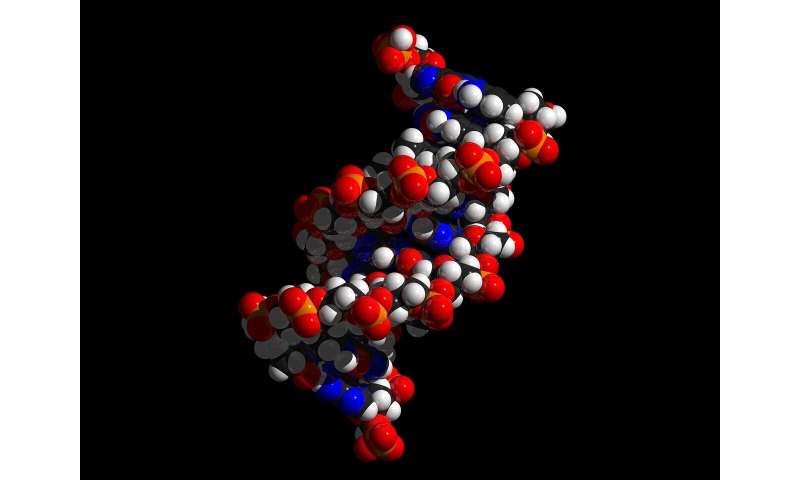
Supercomputer simulations map spliceosome motions in a two-million-atom human cell model
A new study from the Italian Institute of Technology (IIT), in collaboration with Uppsala University (Sweden) and AstraZeneca, shows how computational chemistry and supercomputers can help scientists better understand the fundamental mechanisms of life, specifically those of human cells. This resear...

Image: Phys.org
A new study from the Italian Institute of Technology (IIT), in collaboration with Uppsala University (Sweden) and AstraZeneca, shows how computational chemistry and supercomputers can help scientists better understand the fundamental mechanisms of life, specifically those of human cells. This research was conducted by the Molecular Modeling and Drug Discovery Unit, led by Marco De Vivo at IIT in Genoa, and was published in the journal Proceedings of the National Academy of Sciences.
Originally published at Phys.org