
Science
Scientific discoveries and research

Physicists who uncovered the first particle accelerator were honored with a Nobel Prize 75 years ago
While scientists are known for their dedication to their research, crawling on the floor to avoid electrocution for the sake of a measurement seems a little exc...

Smart silicone coatings can change their friction and stickiness as surroundings reshape nanoscale layers
Research led by a group from the University of Newcastle has found a new way to make silicone surfaces—and control how slippery they are. The work was published...

Want to use AI to improve your work? Have it disagree with you
Knowledge workers such as scientists, teachers, lawyers and business leaders are increasingly using generative artificial intelligence applications for tasks th...

Ancient sea levels reveal when the Earth's poles went wandering
Earth's poles do not always stay in the same place. For example, a region once near the North Pole can end up near the equator, and an area near the equator can...

Fluorescent test speeds screening of thousands of enzyme variants that modify plant compounds
Many natural plant compounds have promising health-related properties, but their poor water solubility can limit how effectively they are absorbed and used. In...
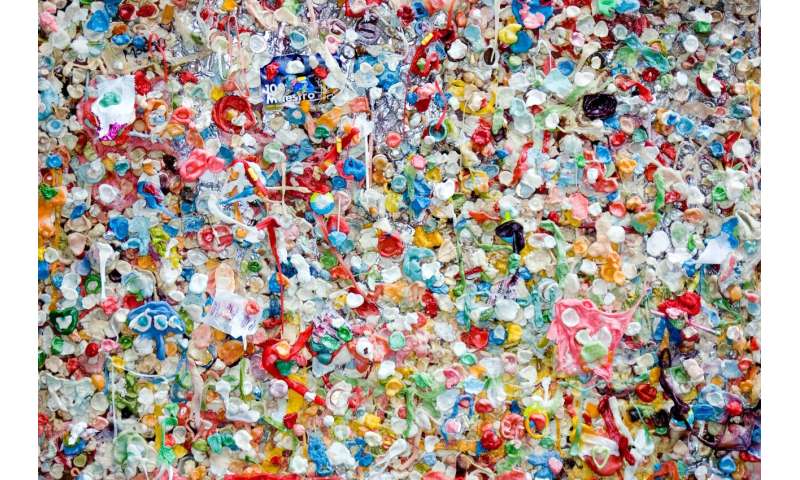
Millions of years of evolution guide AI search for pollution-fighting enzymes
Databases around the world contain information on millions upon millions of enzymes that have the potential to degrade pollutants like plastic. Scientists at Mu...

White nationalism's appeal runs deeper than partisan politics
As Americans prepared to celebrate the nation's 250th birthday on the morning of July 4, sobering images flashed across their phones and TV screens. Hundreds of...

Enzymes become sturdy beads that could support more sustainable chemical production
Thanks to enzyme-based biocatalysis, an enormous range of pharmaceutical active ingredients and other complex molecules can be synthesized in an environmentally...

How stars shine: Infrared observations expose gaps in models of how stars distribute their light
Astronomers using Georgia State University's Center for High Angular Resolution Astronomy (CHARA) Array have found that nearby stars darken toward their edges m...

Q&A: Why are red squirrels endangered—and can we save them?
The red squirrel was once a familiar sight across Britain. Today, it has disappeared from much of its former range. Dr. Kat Hamill, senior lecturer in zoology a...

Iron Age skulls reveal some babies had flat head syndrome—long before the 'Back to Sleep' campaign
Nearly 3,000 years ago, in central Italy, dozens of Picene people were laid to rest curled up on their sides, as if asleep. When their eternal slumber was distu...
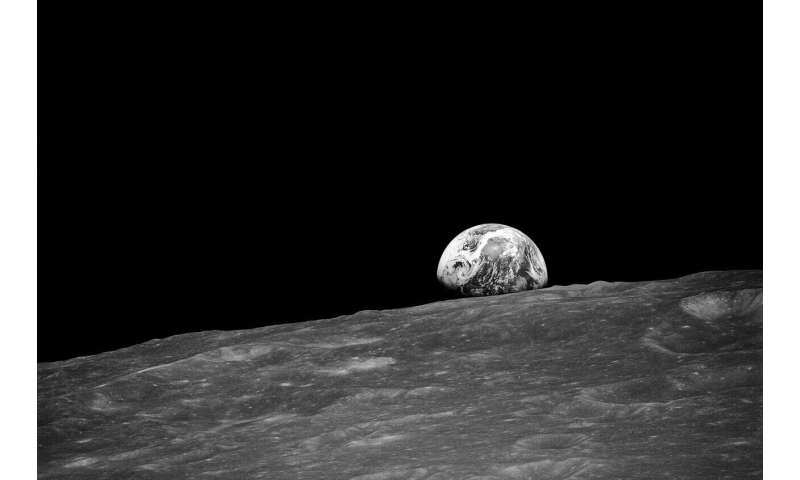
New research shows how water would behave on the moon
As humanity looks toward future bases on the moon, plant cultivation will be critical for sustaining life there. Plants can provide food, oxygen, medicine, wate...