
Science
Scientific discoveries and research

Tanzania's iconic heritage sites face damage from state-backed tourism
Assessment of four heritage sites in Tanzania finds that all are under threat from the institutions meant to steward them, prioritizing income from tourism over...

How Jupiter may have redirected life's ingredients toward Earth 4.5 billion years ago
NASA-supported scientists have provided new information about how the early Earth may have acquired some elements necessary for the planet to become habitable....

Plants boost carbon uptake through water efficiency, not heat adaptation, global analysis reveals
An international team of scientists has discovered that plants are not responding to global warming in the way researchers long assumed. Scientists have expecte...

Interstellar object 3I/ATLAS reveals no technosignatures in seven-hour radio scan
Scientists at the SETI Institute recently searched for technological signals from 3I/ATLAS, the third interstellar object observed in our solar system. Using th...

Research could pave the way for more resilient winter cereals in warmer climates
The arrival of winter marks not only a change in weather, temperature, and day length, but also a change in our activity and behavior. The social outdoor events...

Japan's new seafloor record could sharpen megathrust earthquake warnings in Nankai Trough
Off the southern coast of Japan, the Philippine Sea Plate lies underneath the Japanese mainland. The locked tectonic plates threaten to unleash a catastrophic m...

Thundering footsteps warn caterpillars of lethal ladybeetle attacks
Diminutive warty birch caterpillars (Falcaria bilineata), less than 1.5mm long, ardently defend their leaf tip homes from invading caterpillars by scraping and...

Why doesn't coffee taste like caffeine?
Though decaf fans might disagree, caffeine is a critical component of a cup of joe. This compound is incredibly bitter on its own, but regular coffee itself is...
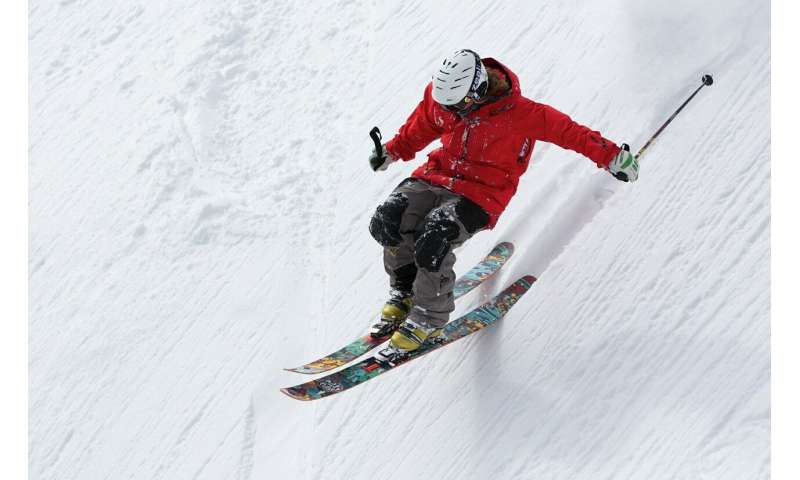
PFAS in ski wax: Despite bans, these forever chemicals linger in wax rooms—so does their health risk
For more than 30 years, manufacturers of ski and snowboard waxes have used PFAS—per- and polyfluoroalkyl substances—to make skis and snowboards glide faster ove...

Programmable chemistry unlocks drugs only in target cells, aiming to cut side effects
Potent drugs like chemotherapy can be life-saving, but often with life-threatening side effects. Notably, they can be indiscriminate, killing both cancer cells...

Temperature gaps help sneeze clouds stay denser and travel farther, experiments show
When a person coughs or sneezes, they expel a cloud of microscopic particles capable of carrying viruses and bacteria that act as vectors for respiratory diseas...

Water-wave tweezers steer tiny 'surfers' without touching them
Summer brings with it the sight of surfers moving seamlessly across wave crests, with ocean waters carrying them along coastlines. A team of scientists has now...